
For academies and professional clubs
Full depth. One club.
One way of playing, from the youngest age group to the first team. Every coach plans on the same 4CM a grassroots club uses, and the Academy and Pro plans add the depth a full-time program works at. A professional club’s first team, U21 and U23 sides and academy are set up with us as one club.
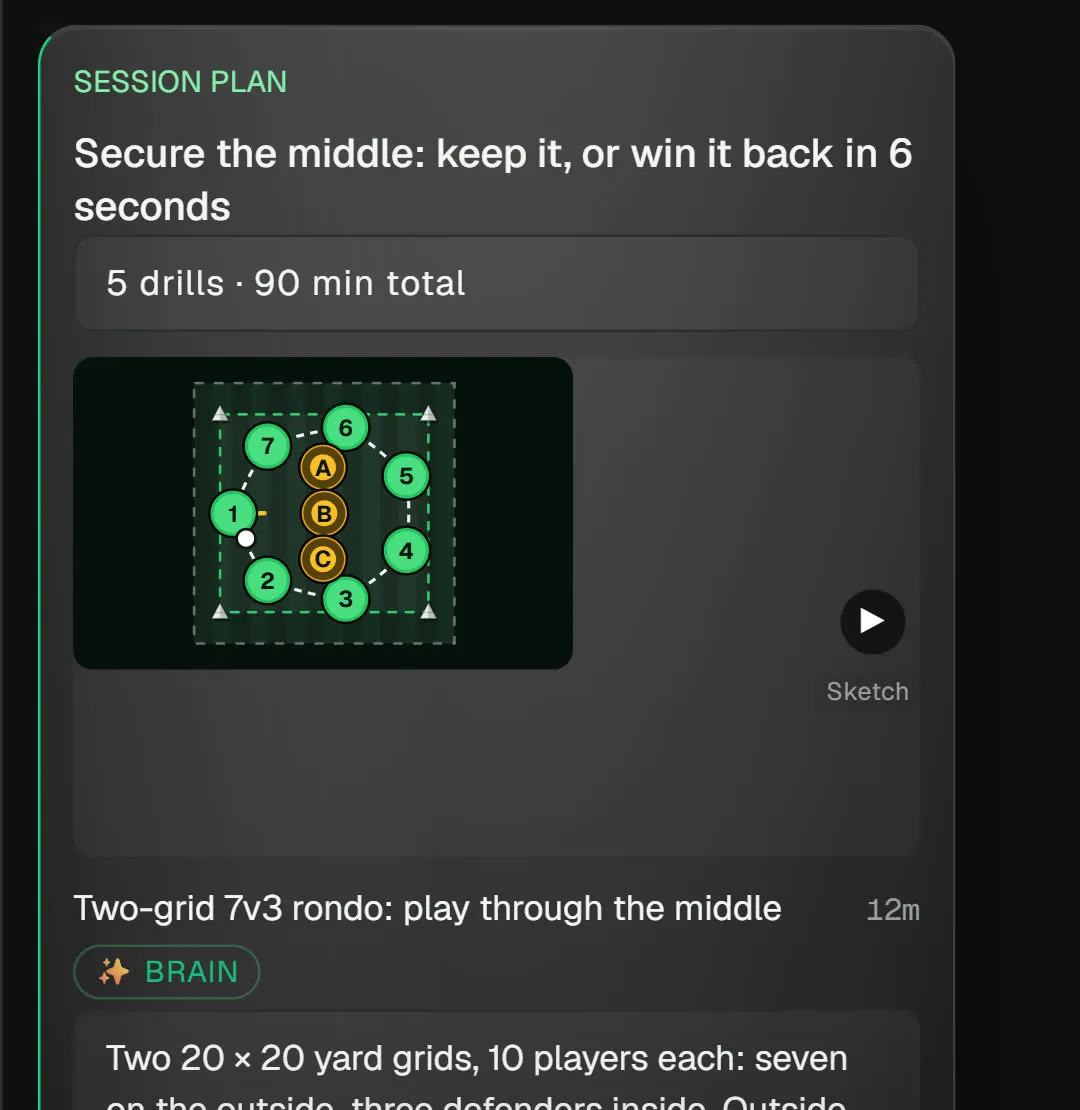
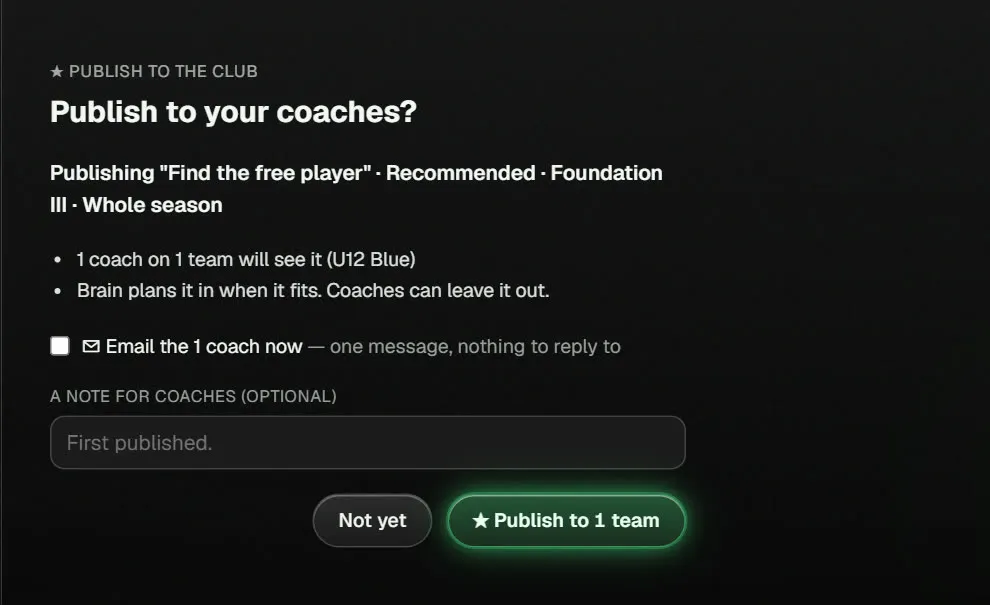
Publish it once. Every team plans from it.
Your head of coaching publishes the game model, curriculum, sessions and endorsed drills once. The Brain plans every team’s sessions from them. A coach can still swap, adapt or skip anything, and records a reason the head of coaching sees. On request
What the Academy plan does for you.
Everything in Club, plus the tools a full-time program works with. All of it is built; the parts 4CM switches on club by club carry a label.
Directors for an age group or a set of teams
One game model, from the youngest age group to the first team.
Your director of coaching publishes the game model, the curriculum, club practices and endorsed drills. A phase lead owns just the age groups or teams they run. The Brain plans every team’s practices from them, and you see every change a coach makes, and why.
On requestPeriodization on the calendar
Every practice inside the block it belongs to.
The calendar flags a phase of play that has had less than a tenth of practice time over the last 28 days, and shows the roster’s birth-quarter spread, so gaps in the program and relative age are in view when you plan.
Opposition and position briefs
Players who know their job before kickoff.
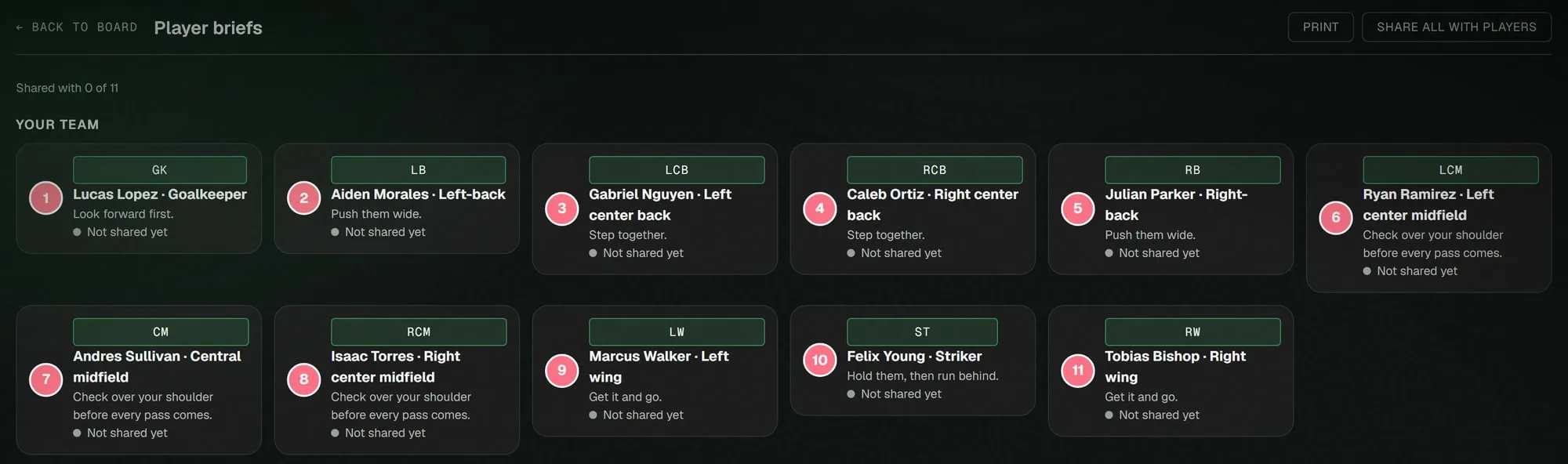
One sheet per position, made from the game plan, the detail growing with age: a line per moment for the youngest, the full brief from U17. Print them for the team talk, or share them with players 13 and over.
The whole tactics board.
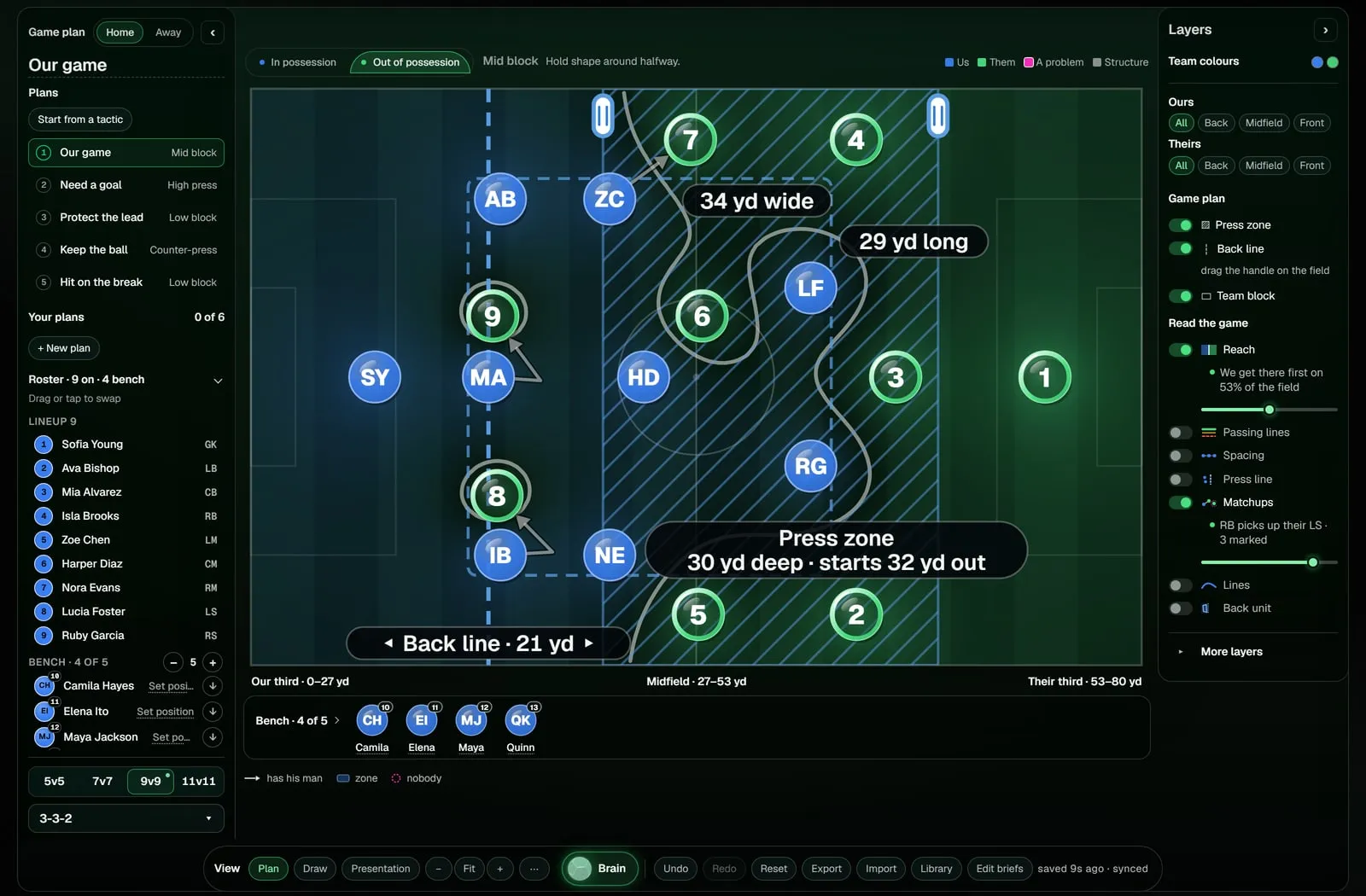
The Academy plan opens every part of it. Set the shape, measure it, put the opposition on, build the plays, and turn it into briefs and a video your players can watch before the game.
Your format, measured
It opens on your team’s own format, up to 11v11, and measures the shape you set in yards: the back line, the press zone, your width and length.
Game plans for every game
Five built-in plans with choices in and out of possession and a job for every position, plus up to six of the team’s own, each linked to its game.
On requestPlays that move
Build a play step by step and the board animates it, so players see the movement, not just where they end up.
The other team on the board
Put the opposition on: it reacts to your shape, or plays a plan of its own.
Every analysis layer
Space, reach, crowding, channels, zones and the offside line, on top of passing lines, spacing, matchups and the back unit: all twelve at 11v11.
The Brain on the board
Ask it about the shape. It proposes a change, shows it on the board, and you keep it or put it back.
Present it, then send it
Full-screen Presentation with a few steps and a clicker, then record the walkthrough as a video, or clip one play, to send round before the next practice.
Briefs from the plan
Position and opposition briefs come straight from the game plan on the board, so the team talk and the sheets say the same thing.
Many teams, many staff, one club.
An academy is many teams at different levels, each with more than one coach.
Team levels, up to Professional
Each team has a level: Recreational, Competitive, Pathway, Semi-pro and Professional. The Brain writes for that level, the grassroots version for a recreational side and full depth above it.
Every member of staff
Assistant, goalkeeping, strength and conditioning and other coaches on a team, under your own titles if you like. Every one of them passes the same clearance check before seeing a player.
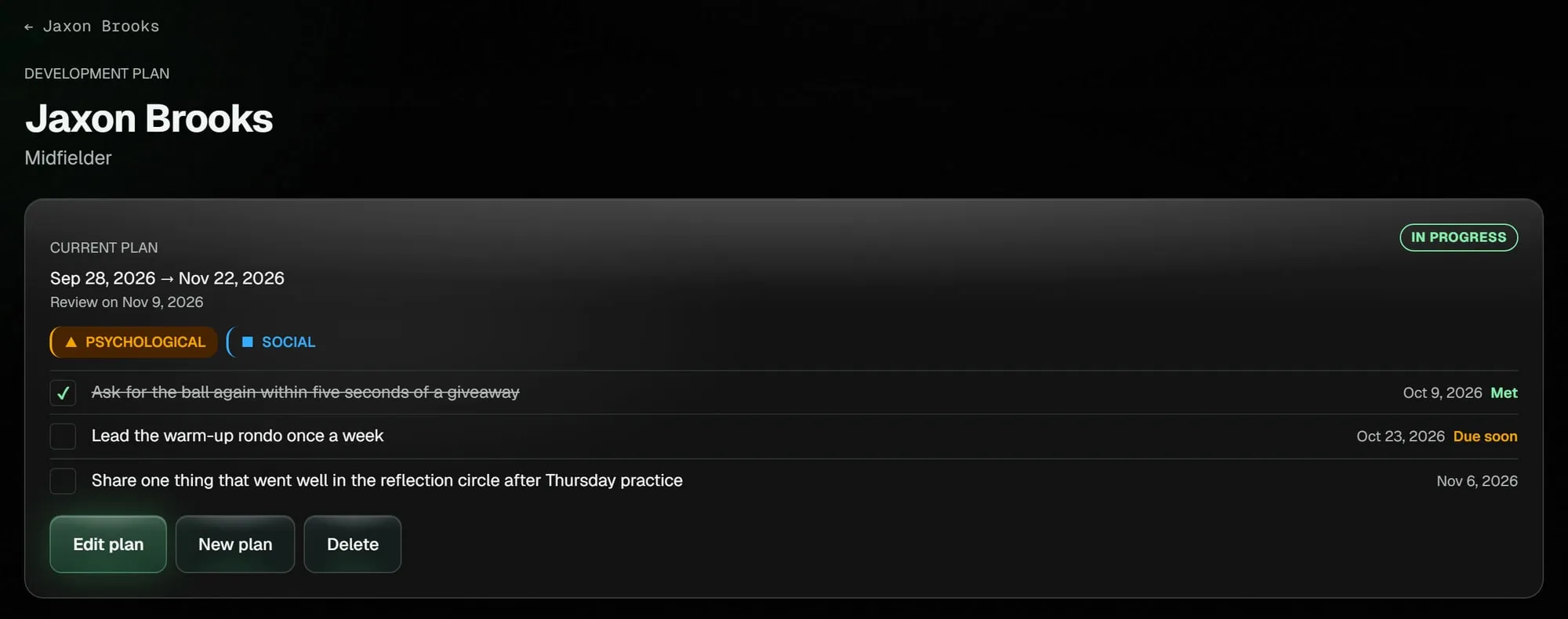
A development plan for every player
Written by the coach, and carried on by the next head coach when a team changes hands.
Every team in one view
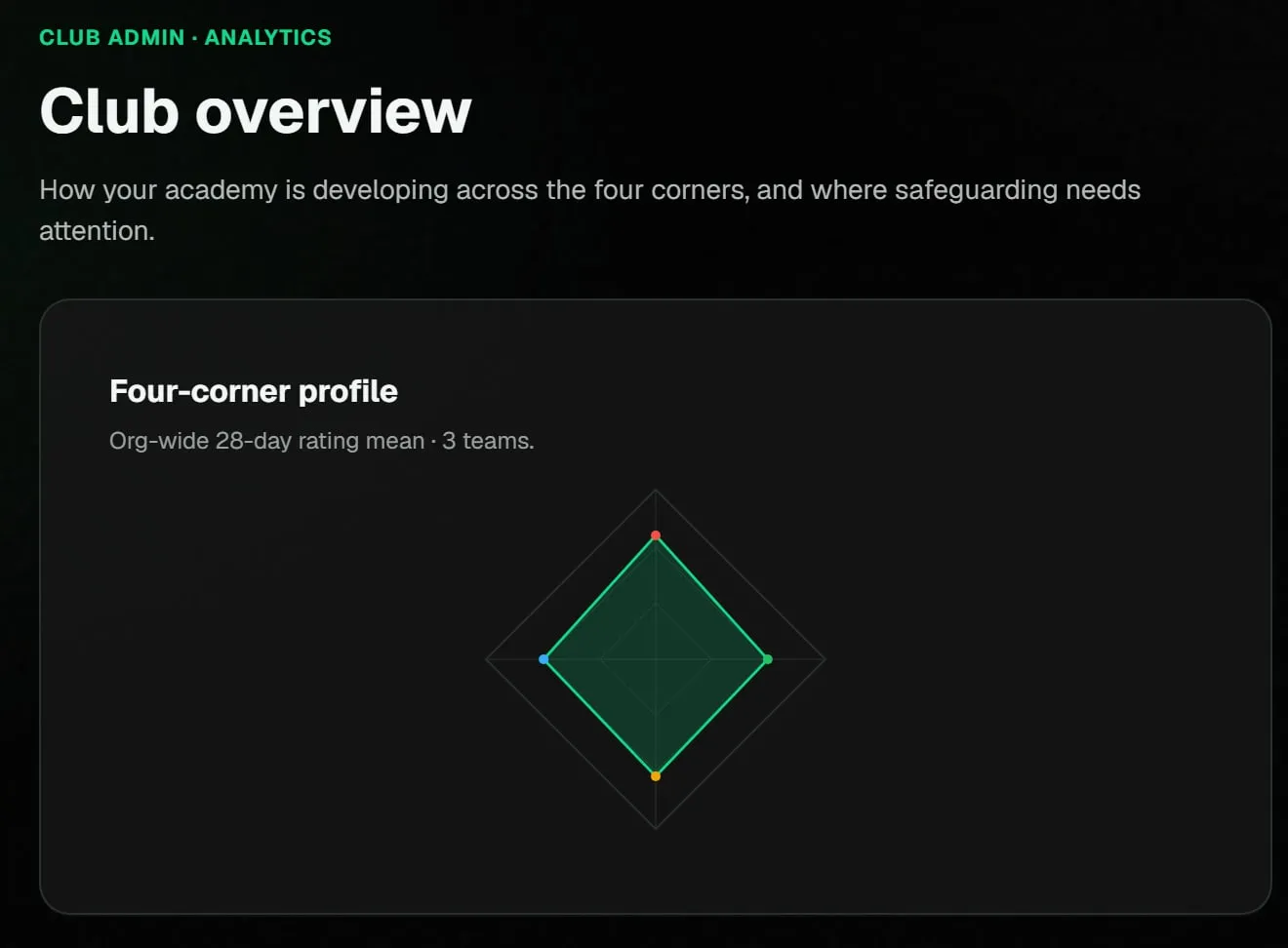
One four-corner profile across all the club’s teams, on the club admin’s overview.
Relative age and the psych-social picture, beside the coaching.
Each team’s insights show its four-corner profile, the psych-social index and the birth-quarter spread, with welfare flags that stay with the coach. A late developer is not marked down for being late.
For a professional club.
The Pro plan is everything in Academy, for a club that runs a first team and its pathway together.
Every side, one club
The first team, U21 and U23 sides and the academy, set up with us as one club, so one game model reaches every one of them.
A Brain that talks as a peer
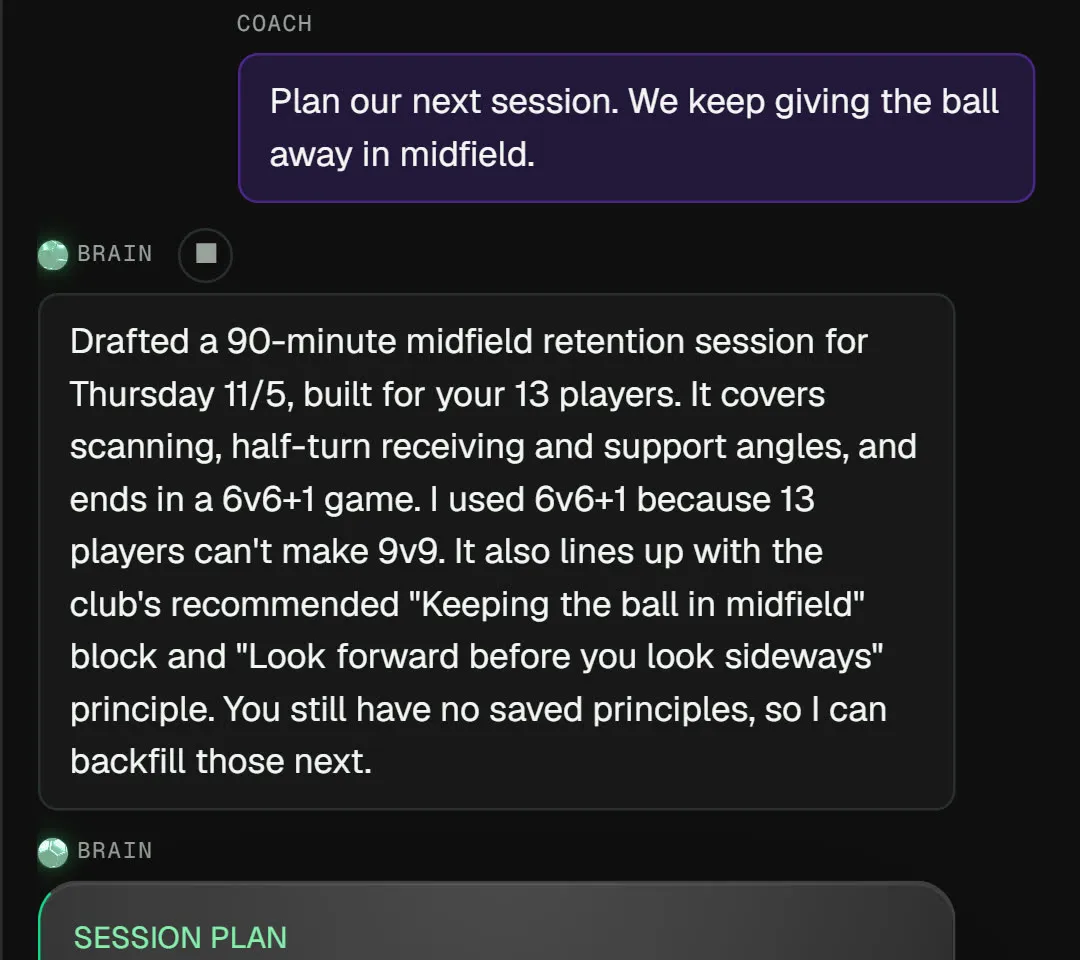
Set a coach’s level to academy or professional and the Brain plans at full depth and talks as one coach to another. The first team’s draft at the top of this page is a real one.
The largest Brain allowance
Agreed with the club, so full-time staff can plan the whole week, every week.
Safety is not an academy extra. Safety officers, reporting a concern, the coach clearance check and every data right come with every plan. Safeguarding
Running a grassroots or community club? For clubs